

ROPA Method

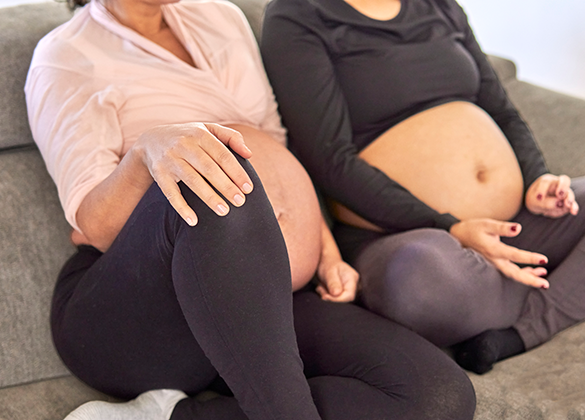
Also known as Reception of Oocytes from Partner or Reception of the Couple’s Eggs, is the reproductive treatment for couples of women who want to start a family. A woman from the couple proceeds to perform the ovarian stimulation to provide the eggs, while the other mother gestates and gives birth to the baby.

Procedure

  • Paso 1Ovarian stimulation.

    The woman receives hormonal medication for about 10 days to increase the production and maturation of the eggs.
  • Paso 2Follicular puncture and aspiration.

    When enough mature oocytes are observed, an ovulation is induced and then a minimal procedure in the operating room is conducted under light sedation to extract the eggs through a technique guided by vaginal ultrasound. After this, woman can return to her normal activities in a few hours.
  • Paso 3Fertilization and embryo culture.

    At IVF-Life, the process of fertilization of the eggs is carried out in the laboratory under the expert supervision of embryologists. This team of professionals carefully monitors the development of the embryos to select those with greater viability. In addition, they keep patients always informed about the progress of treatment. A complementary technique that can be used is assisted hatching. This technique consists of making a small opening in the zona pellucida that surrounds the embryo to facilitate their exit and improve the possibilities of implementation in the uterus. It is particularly useful in cases of embryos with a thicker zona pellucida, women over 37 years of age or with several failed IVF attempts.
  • Paso 4Embryo Transfer.

    During the embryo transfer, a quick and painless procedure, the doctor introduces the embryo in the uterus. With the ultrasound evaluation and the technology and experience of IVF-Life, the transfer of a single embryo is recommended. This practice increases the chances of a successful pregnancy by ensuring its health and viability.
  • Paso 5Pregnancy analysis.

    After 12-14 days from the embryo transfer, an analysis is performed to confirm if there is pregnancy. It measures the beta-hCG hormone, whose levels are a reliable marker for confirming pregnancy.
  • Paso 6Pregnancy control ultrasound.

    Two weeks after the positive pregnancy test, a control ultrasound is done. Finally, if there are good quality embryos left without an implant, they are frozen in liquid nitrogen at high temperatures for use in future cycles. This avoids having to repeat the ovarian stimulation and the follicular puncture.

Who is this treatment indicated for?

  • Couple of women who wish to participate in the reproductive process.

  • Women who have alterations in their reproductive system, such as in the Fallopian tube.


This site is registered on wpml.org as a development site. Switch to a production site key to remove this banner.